Unpasteurised cheese

If you already knew the HAS answer and it was the one you wanted why would you want to hear something else? 🤔🤔

Just chat, a very expensive cheese at stake and wanting to at least talk about it before finally acknowledging that its too risky and putting all that money in the bin.

It was an interesting discussion on the way.
 
I'm going to get some authentic Brie de Meaux tomorrow. That will supplement the Appenzeller from Switzerland, the goat cheese Camembert, the Dutch Gouda and the German Baviera blue (never had that before!)

Be careful not to put it next to a radiator!

Actually, how will you store it?
 
Just before New Year, my mate the cheesemonger told me he'd got some Torta del Casar, a DOP, unpasteurised cheese from Casar de Cáceres, in the western part of Spain, not far from Portugal. Couldn't resist the opportunity, even though the cheese (450 gms, about 1lb) was expensive. Me, the cheese fiend, just had to have some.
I was planning on opening it for guests on New Year's Eve, but there were only 10 of them so I said nah, keep it for later.
4 weeks later, there was this odd smell from the fridge and I knew what it was. Opened it up, sliced myself a nice chunk and OMG, glory, glory hallelujah.
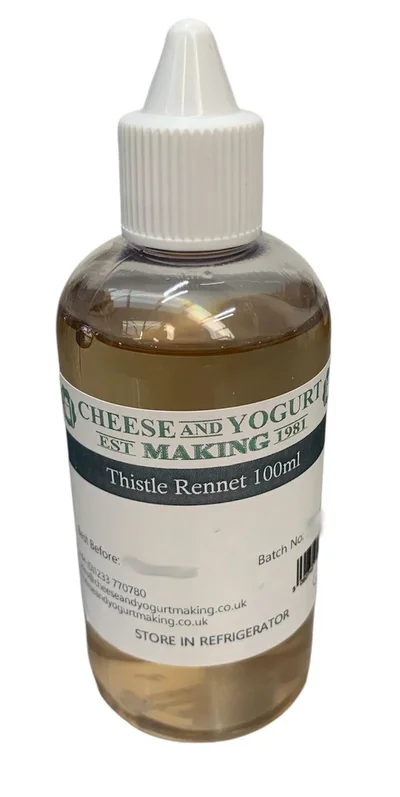
It's a sheep's milk cheese, and the milk is curdled with a coagulant found in cardoons, a wild thistle.
Nope, I don't think I've ever heard of anything as esoteric as that. Definitely has to be the weirdest thing I've ever heard of.
Anyway, the cheese is nothing short of spectacular. Out of this world.
Torta del Casar 1.jpg
Torta del Casar 2.jpg
 
It's a sheep's milk cheese, and the milk is curdled with a coagulant found in cardoons, a wild thistle.
Nope, I don't think I've ever heard of anything as esoteric as that. Definitely has to be the weirdest thing I've ever heard of.
Anyway, the cheese is nothing short of spectacular. Out of this world.

See belew ( my bold):
https://academic.oup.com/ijfst/article/42/5/556/7864140
A powdered vegetable coagulant (PVC) obtained from the cardoon (Cynara cardunculus) was compared with calf rennet in batches of Manchego cheese, by determining different chemical, biochemical and sensory characteristics, which were monitored over a 6-month ripening period. For most chemical parameters (moisture, fat, protein, acidity, NaCl and pH) and water activity studied, no differences were observed between the two types of coagulants. However, higher casein hydrolysis was observed after 2 days of ripening in cheeses produced with vegetable coagulant compared with those made with rennet. Soluble nitrogen was significantly higher (P < 0.05) and the other nitrogen fractions were only slightly higher (P > 0.05) in cheeses with PVC. In general, the sensory quality (odour, colour, taste intensity and creaminess) was higher in cheeses obtained with vegetal coagulant than those made with animal rennet.

 
Well there we have it. The coagulant is more widely used than I thought. The first time I tasted it, there was definitely a "vegetable" flavour there, but I couldn't put my finger on it. If you've ever tried those soft French cheeses, wrapped in chestnut leaves (or something similar), that's what it reminded me of.
Does make you wonder though; how on earth did someone come up with the bright idea of using a thistle to thicken their cheese?
 
Well there we have it. The coagulant is more widely used than I thought. The first time I tasted it, there was definitely a "vegetable" flavour there, but I couldn't put my finger on it. If you've ever tried those soft French cheeses, wrapped in chestnut leaves (or something similar), that's what it reminded me of.
Does make you wonder though; how on earth did someone come up with the bright idea of using a thistle to thicken their cheese?
Sounds delicious.

Dates back to ancient Roman times: Columella’s De Re Rustica describes using the juice of the wild thistle to curdle milk.

Also used a lot in Spain and Portugal
https://www.alimentarium.org/en/story/garden-curdling-milk
Spain and Portugal are the largest producers of vegetarian cheeses today. They have a rich tradition in using coagulants from cardoon thistle, artichoke and other species of the Cynara genus for their vegetarian cheeses. The traditional tortas from the Extremadura region of Spain are coagulated using cardoon thistle. Azeitão and Castelo Branco from Portugal and Chiviri from Spain are other excellent examples of vegetarian cheeses from the Mediterranean region5. The texture and flavour of these cheeses may prove a little unusual but very pleasant.

It is the stamens of the cardoon, artichoke and other related species which contain the compounds used to curdle milk. They are plucked or cut from the flower and then dried and ground into a powder, which is then steeped in water to extract the milk curdling enzymes. This solution is filtered to remove unwanted residues and is then used to curdle milk in the first steps of the cheesemaking process. Fresh stamens can be used but, to avoid storage problems, such as the development of mould, stamens are usually dried and then, if stored properly, they can be used for up to 2 years.
 
Back
Top Bottom