• I’ve added a casual chat room to CookingBites as a place for off-topic banter, light conversation, and short-lived chit-chat that doesn’t belong in forum threads. The chat room is informal and lightly-to-not moderated, with messages being temporary, so it’s ideal for friendly back-and-forth that would otherwise derail discussions. Site rules still apply, but there’s no reporting system or expectation of post-by-post moderation - if something becomes uncomfortable, the right response is to step away. If a topic has substance or lasting value, it still belongs in the forums; everything else can head to chat.

What are you baking today (2026)?

Tastes pretty good. Really didn't discern a difference from not using whey.
I'd imagine you'd require a very refined bread-eating palate to notice a difference, and that's not belittling your palate by any means, just pointing out that bread tastes mostly of the grain you use to make it.
I'm definitely an amateur compared to most of you bread makers on here, and my bread usually turns out a bit "flat", like yours, so I'll be interested to see how your next "whey" loaf turns out.
 
I'd imagine you'd require a very refined bread-eating palate to notice a difference, and that's not belittling your palate by any means, just pointing out that bread tastes mostly of the grain you use to make it.
I'm definitely an amateur compared to most of you bread makers on here, and my bread usually turns out a bit "flat", like yours, so I'll be interested to see how your next "whey" loaf turns out.
No refined palate here for bread. I try to make it kind of healthy sometimes and it tastes like it! 😬
 
I'd imagine you'd require a very refined bread-eating palate to notice a difference, and that's not belittling your palate by any means, just pointing out that bread tastes mostly of the grain you use to make it.
I'm definitely an amateur compared to most of you bread makers on here, and my bread usually turns out a bit "flat", like yours, so I'll be interested to see how your next "whey" loaf turns out.
I've only used whey in white bread and you can taste it there.
 
Had me on chutney!
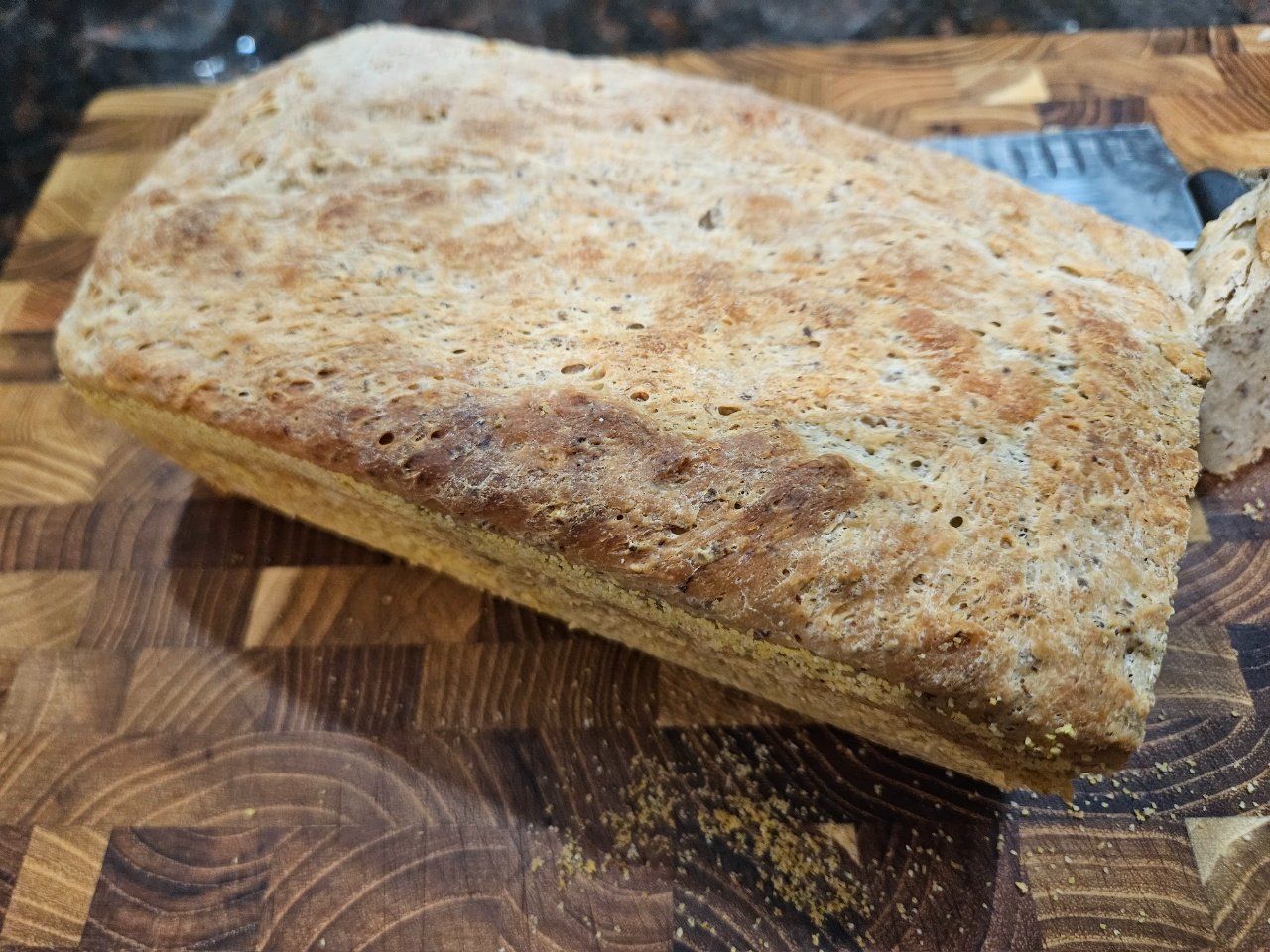
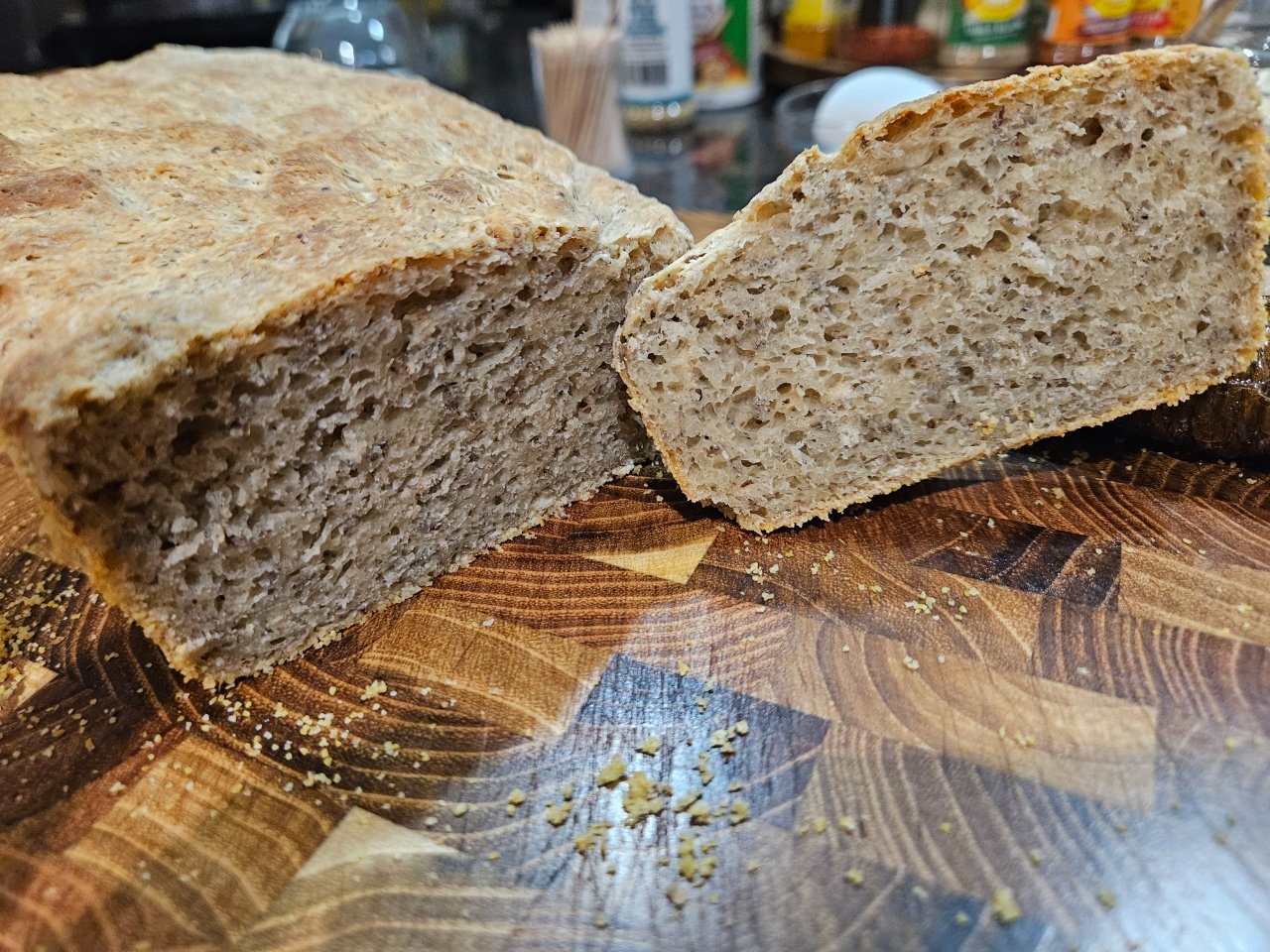
1000055226.jpg
 
My first ever shot at using whey instead of water for making bread. Since whey is only 93% water there's a spot of math required.

Grams of water needed/0.93 = amount of whey to use.

I also eyeballed in some ground flax seeds, chia seeds, and oatmeal...
Looks good!
Guessing it's a recipe you make regularly that you used for trying the whey?
Doesn't matter that whey is 93% water for hydration percentage purposes - it's for any liquid regardless of composition
 
Looks good!
Guessing it's a recipe you make regularly that you used for trying the whey?
Doesn't matter that whey is 93% water for hydration percentage purposes - it's for any liquid regardless of composition
Thank you. Don't know what you mean by doesn't matter. In this recipe if I used whey just like it was water my hydration would drop to 63% instead of the 68% target. The crumb isn't as open as I'd like so using a smaller hydration isn't going to help that. Next go around I'll figure for 73%, trial and error! 😄
 
Setting the baseline, sure. The whey is all liquid like water but of course has different properties, no not just the hydration number.

I find that flour types and brands have varied absorption rates in any case. Since hydration percentages in baking refer to the ratio of liquids, which can be milk, water, oil, eggs etc. to flour, I see it as a general rule of thumb, somewhat precise, but not exact rocket science for adapting t&t'ed recipes. Once I find a good hydration for a new recipe and ingredients I then generally stick to it.
But definitely trial and error with a new formula.
 
Last edited:
Setting the baseline, sure. The whey is all liquid like water but of course has different properties, no not just the hydration number.

I find that flour types and brands have varied absorption rates in any case. Since hydration percentages in baking refer to the ratio of liquids, which can be milk, water, oil, eggs etc. to flour, I see it as a general rule of thumb, somewhat precise, but not exact rocket science for adapting t&t'ed recipes. Once I find a good hydration for a new recipe and ingredients I then generally stick to it.
But definitely trial and error with a new formula.

To think that I baked "brick bread" for years before discovering hydration and how! 😄
 
Setting the baseline, sure. The whey is all liquid like water but of course has different properties, no not just the hydration number.

I find that flour types and brands have varied absorption rates in any case. Since hydration percentages in baking refer to the ratio of liquids, which can be milk, water, oil, eggs etc. to flour, I see it as a general rule of thumb, somewhat precise, but not exact rocket science for adapting t&t'ed recipes. Once I find a good hydration for a new recipe and ingredients I then generally stick to it.
But definitely trial and error with a new formula.
I'm like you
To me liquid is liquid and I use that to calculate hydration.
There is another school of thought as well though, and they only count water (and then they make a 50% hydration (egg)dough as they are not counting the eggs :scratchhead:
 
I'm like you
To me liquid is liquid and I use that to calculate hydration.
There is another school of thought as well though, and they only count water (and then they make a 50% hydration (egg)dough as they are not counting the eggs :scratchhead:
I go with water content for water. If an egg is 75% water then a 60g egg counts as 45g water.
 
I have some pizza dough. Have several options. Pizza, ham and cheese calzone, sausage bread. Maybe one of each. I’ll figure it out later. Been awake and up since 4:00am. Going take a nap and then decide.
 
Back
Top Bottom